


Chaty - Chat & Make Friends
3.91.55K Reviews
App Specs
- Version
- 1.3.75
- Updated On
- License
- Free
- Downloads
- 500,000+
- Developer
- Chaty App
- Categories
- Social
- Platform
- Android
Screenshots
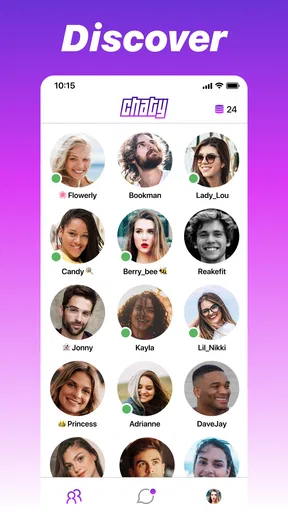
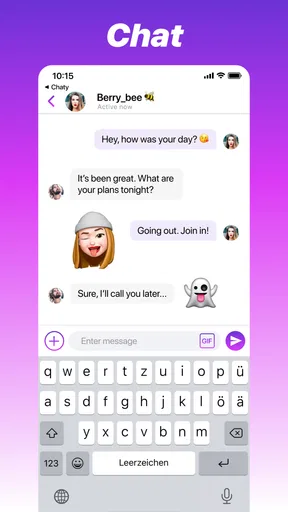

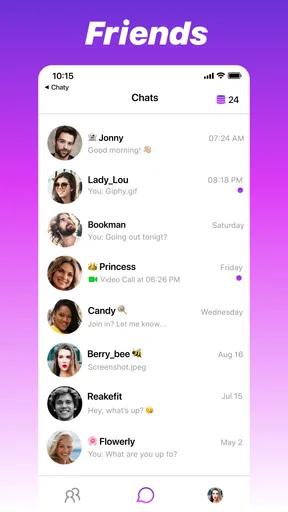


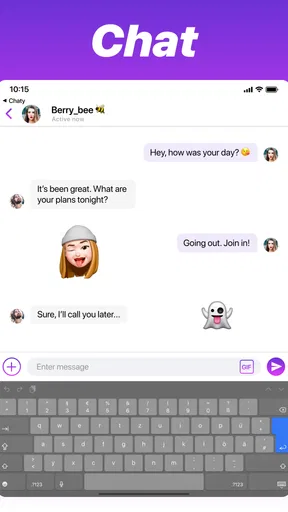

 Analysis by AppCompare
I spent time with Chaty as a social messaging app, and my first impression was that it aims for a more direct kind of online conversation. Instead of presenting itself as a broad content feed, it focuses on helping people connect through private chats. That makes the experience easier to understand than many social platforms, although it also means the quality of the app depends heavily on whether you find conversations that feel worthwhile.
Chaty is developed by Chaty App and is available for free. It is listed for mature users aged 17 and over, and it has built a sizeable presence with over 500 thousand installs. Its average score sits at 3.9 from around 6 thousand ratings, alongside roughly 1.6 thousand written reviews. Those figures suggest a mixed but reasonably established reception: enough people have tried it to make the app feel like a real social destination, while the rating also hints that it will not suit everyone equally.
How Chaty fits into everyday private messaging
The central idea is simple: use the app to meet or communicate with people through private conversations. I found that focus useful when I wanted something more personal than scrolling through public posts. A private chat can feel less noisy than a typical social network, especially when the main reason for opening the app is to talk rather than consume an endless stream of content.
That simplicity is also the main thing to understand before installing it. Chaty is not the kind of app I would choose for organizing a work team, keeping up with family announcements, or replacing a familiar messenger where all of my existing contacts already live. Its appeal is closer to discovering conversations and making social connections beyond my usual circle.
The app runs on Android devices using version 8.0 or later, and the current release is version 1.3.75. That makes it accessible to people who are not using the newest phone, although a compatible operating system does not automatically guarantee that every device will feel equally smooth. With social apps, the practical experience can depend on how quickly chats load, how comfortable the interface feels, and how active the community is at the time you use it.
One useful way to approach Chaty is to treat it as a conversation tool rather than a guaranteed friendship machine. Installing it may open the door to private interactions, but the user still has to decide which conversations deserve attention. I recommend taking a little time to see how people communicate before sharing personal details or investing too much energy in a new contact.
What the free access really means
The app itself is free to download, which makes trying it relatively straightforward. I could evaluate the basic experience without committing money first, and that matters for a social platform because its value depends on personal fit. You need to see whether the available conversations, tone, and pace work for you before deciding whether the app belongs in your routine.
Worth Reading Before You Choose

EA SPORTS FC Mobile 26 Is a Bigger Football Game, but It Takes Time

Flipboard Shows What News Apps Must Do Beyond the Feed

Switching to Android Auto Means Rethinking Your Driving Routine

Google Calendar Makes a Crowded Week Easier to Manage

Ludo King Makes the Most of the Minutes Between Plans

Baby Panda World Brings Quick Play to Modern Phones, but Its Game Library Feels Busy
Chaty also includes in-app purchases ranging from $3.99 to $359.99 per item. That is a very wide range, so I would not treat the word “free” as a complete description of the possible cost. The sensible approach is to begin with the no-cost experience, identify what you actually use, and only then consider whether any paid option offers enough value to justify spending.
I particularly like that this encourages a trial-first decision. A paid purchase cannot create genuine chemistry with another person, make an inactive conversation interesting, or guarantee that the community will match your expectations. In a messaging app, the most important value usually comes from the quality of interactions, not from simply unlocking more access.
At the same time, the broad purchase range deserves attention from anyone who is prone to impulse buying. I would avoid purchasing anything during the first session. Use the free portion long enough to understand the rhythm of the app, and make sure you know exactly what a purchase changes before paying. The listed price range is enough to show that some options may represent a small convenience while others could be a much more serious commitment.
Where the app delivers genuine value
Chaty’s strongest value is its narrow purpose. When I wanted private social interaction, I did not have to fight through a large collection of unrelated features to reach a conversation. That directness can make the app feel more approachable than a general-purpose network filled with videos, public updates, groups, shopping sections, and notifications competing for attention.
It can also be useful for someone who wants to widen their social circle without immediately connecting their experience to existing offline relationships. A person moving to a new place, spending more time at home, or simply looking for conversations outside their normal routine may appreciate that separation. The app gives that kind of user a dedicated space to explore social contact.
Another benefit is the private nature of the main interaction. Private chats can make it easier to focus on one person and one subject instead of performing for a public audience. I found that this format is better suited to gradual conversation: exchanging a few messages, noticing whether the other person responds thoughtfully, and deciding whether to continue without needing to maintain a public profile of the interaction.
There is a practical workflow that makes the experience more rewarding. I would start with short, low-pressure conversations and look for consistency rather than immediate intensity. If someone replies clearly, respects boundaries, and shows interest in a two-way exchange, the conversation may be worth continuing. If the interaction quickly becomes demanding, vague, or uncomfortable, ending it early is usually better than trying to rescue it.
That may sound like ordinary social advice, but it is especially important in an app built around private chats. Public feeds provide some visible context about how a person behaves. A private conversation gives you less information at the beginning, so your own pacing and judgment become part of the experience.
A realistic day-to-day use case
Imagine opening Chaty after work because your usual messaging apps are tied to people you already know, while you want a fresh conversation. I would spend a few minutes checking the available social space, begin with a neutral topic, and avoid treating the first promising exchange as an instant friendship. If the conversation remains comfortable over several visits, I might return to it; if it feels forced, I would move on without feeling that the app had failed.
This is where Chaty can fit naturally: short visits built around discovering whether a conversation has potential. It is less convincing as an app that must occupy your attention all day. I would rather use it intentionally, with a clear reason for opening it, than allow notifications or curiosity to turn it into another source of digital noise.
For a user who enjoys meeting unfamiliar people, that routine could provide real value even without complicated tools. For someone who wants a reliable way to message close friends, the same routine may feel unnecessary because established messengers already handle that job more efficiently.
Tradeoffs that affect the experience
The biggest tradeoff is that private messaging offers focus but less public context. A direct chat can feel personal, yet it can also make it harder to judge whether someone is a good match before investing time. I would keep early conversations general and avoid sharing identifying information, financial details, or anything that could make me vulnerable.
The mature age rating is another important consideration. Because Chaty is marked for users aged 17 and over, I would not present it as a general family messaging app or recommend it for younger teenagers. Parents looking for a controlled communication space for children should choose a service designed specifically around family supervision and known contacts instead.
There is also the normal uncertainty that comes with a social community. An app can be well designed and still feel disappointing if the conversations available at a particular moment are not a good fit. The rating of 3.9 reflects that the overall experience is not universally loved, and I think that is a fair warning to keep expectations realistic. Chaty may work well for one person and feel empty or awkward to another.
I would also compare it carefully with familiar alternatives. A standard messenger is usually better when I already know exactly who I want to contact. A large social network is often better for public updates, shared interests, and visible community activity. A dating-focused service is more appropriate when romantic matching is the central goal. Chaty makes the most sense in the space between those options: private social conversations without requiring the app to be my main communication system.
That middle position is both its identity and its limitation. It avoids some of the clutter of broad social platforms, but it may not offer the same depth of purpose as a service built for a specific relationship type or community. I would choose it because of the kind of conversation I want, not because I expect it to replace every other social app.
Small habits that improve the value
My first tip is to judge conversations by effort over time, not by an exciting opening message. A strong first exchange can be pleasant, but reliable replies and mutual curiosity are more useful signals. This approach helps prevent the common mistake of spending too much attention on a contact who is only briefly engaging.
My second tip is to separate experimentation from spending. Since the app is free to start and paid items can reach a much higher cost than a casual purchase, I would use the free experience to learn the app’s real rhythm. If you cannot explain what a paid item adds to your own use, it is probably not worth buying yet.
My third tip is to keep Chaty as one part of a social routine rather than the only place you seek connection. A private chat can be enjoyable, but it should not become a substitute for trusted friends, established support networks, or real-world relationships. This is especially important when a new conversation feels unusually intense very quickly.
Finally, I would use the app at a pace that protects attention. Social messaging can encourage frequent checking because every new reply feels personal. Setting a simple boundary, such as opening the app only when I genuinely have time to talk, makes the experience calmer and helps me notice whether I am receiving meaningful value or merely reacting to notifications.
Who should try it, and who should skip it
I think Chaty is worth trying for adults and older teens who enjoy meeting new people through private conversation and want something more focused than a public social feed. It may also suit someone who is comfortable starting slowly, filtering contacts carefully, and accepting that not every chat will become a lasting connection.
It is less suitable for users who need dependable communication with people they already know. If my priority were family group messages, professional coordination, or a searchable archive of important conversations, I would choose a conventional messenger instead. Those tasks benefit from established contact lists and predictable communication habits.
I would also skip it if I wanted a tightly moderated, purpose-specific community or a clear matching system built around one goal. Chaty’s broad social positioning leaves more responsibility with the user to decide which interactions are worthwhile. That freedom can be attractive, but it also means the app may feel less structured than a specialized alternative.
People who are uncomfortable with the mature audience label should pay attention to that before installing. The age rating is not a minor detail here; it changes who the app is appropriate for and how cautiously it should be approached. I would recommend reading the app’s current on-device prompts and using the platform’s reporting or blocking controls whenever an interaction crosses a personal boundary.
My buy-or-skip verdict
My overall view is cautiously positive. Chaty offers a clear, approachable way to explore private social conversations, and the free entry point makes it reasonable to test without immediate financial pressure. Its best quality is focus: it is built around talking to people rather than trying to become an entire digital lifestyle.
I would not pay quickly, though. The in-app purchase range reaches from $3.99 to $359.99 per item, and the value of any paid option depends on whether the free experience already gives me conversations I genuinely want to continue. No purchase can solve a mismatch between my expectations and the community, so I would treat paid features as optional rather than necessary.
For me, the decision is simple: try it if you want new private conversations and are willing to manage your own boundaries; skip it if you need a familiar contact messenger, a dedicated dating service, or a highly structured community. Chaty is not a universal replacement for those apps, but it can be a useful social experiment when approached patiently.
The developer, Chaty App, has created something easy to understand, but the real test is personal fit. I would install it, spend time with the free experience, avoid rushing into purchases, and judge it by the quality of the conversations rather than by how many chats I can start. Its value comes from thoughtful connections, not from simply being present in another social inbox.
Pros
- Simple interface makes starting conversations quick and approachable.
- Supports meeting people beyond your existing social circle.
- Chat-focused design keeps the main experience easy to navigate.
- Useful for casual conversations and passing time.
- Available on mobile for convenient communication on the go.
Cons
- Conversations may vary greatly in quality and responsiveness.
- New users may need time to find compatible chat partners.
- Privacy settings should be reviewed carefully before sharing details.
- The experience can feel repetitive without active
- interesting users.
- Some features or interactions may depend on in-app purchases.
FAQs for Chaty - Chat & Make Friends
What is Chaty - Chat & Make Friends, and how does it work?
Chaty - Chat & Make Friends is a social communication app designed for discovering and talking with new people online. After creating a profile, users can typically browse suggested accounts, start conversations, and interact through chat features. The experience depends on the available community in your region, so the number and quality of matches may vary. It is best suited to users looking for casual conversations and new social connections.
Is Chaty - Chat & Make Friends free to download and use?
The app can generally be downloaded at no initial cost, but some features may be limited to free users. Depending on the current version, Chaty may offer optional purchases, premium memberships, virtual items, or other paid functions that improve access or visibility. Before confirming a purchase, check the pricing and subscription terms shown in the app store and inside the application, especially for automatic renewal conditions.
Is Chaty - Chat & Make Friends safe for meeting new people online?
Chaty can be used safely when you treat conversations with the same caution as any online social platform. Avoid sharing your home address, financial information, passwords, private documents, or exact daily routine. Keep early conversations inside the app, be careful with links and requests for money, and report suspicious behavior. Parents should also review age requirements and supervise younger users where appropriate.
Can users control who contacts them and report unwanted behavior?
Social chat apps are more comfortable when they provide tools for managing unwanted interactions. In Chaty, look for profile privacy settings, blocking controls, reporting options, and ways to remove or restrict conversations. If someone becomes abusive, asks for inappropriate information, or appears to be impersonating another person, stop responding and use the available report and block functions rather than continuing the conversation.
What should I check before creating a Chaty account?
Before signing up, review the app’s age requirement, privacy policy, permissions, and account-deletion process. Pay attention to what profile information is visible publicly and whether the app requests access to contacts, photos, notifications, or location. You should also confirm whether registration requires a phone number or social account and understand how your data may be used, stored, or shared with service providers.


